Read my comments on my use of Artificial Intelligence below
Read my comments on my use of Artificial Intelligence below
I’m releasing Oceanum the way stories were meant to be shared — piece by piece. Three chapters every week. Free. No paywalls. No hidden fees. No “premium tier” gimmicks. Just the story as it unfolds, exactly as I envision it. I’m not chasing algorithms or building a subscription machine — I’m telling a story and inviting you to walk the journey with me. The first chapters begin March 7. If you sign up for updates, your email stays private. No ads. No third parties. No surprises. Ever.
A Civilization Beneath the Sea. The Fate of Humanity Lies on Land
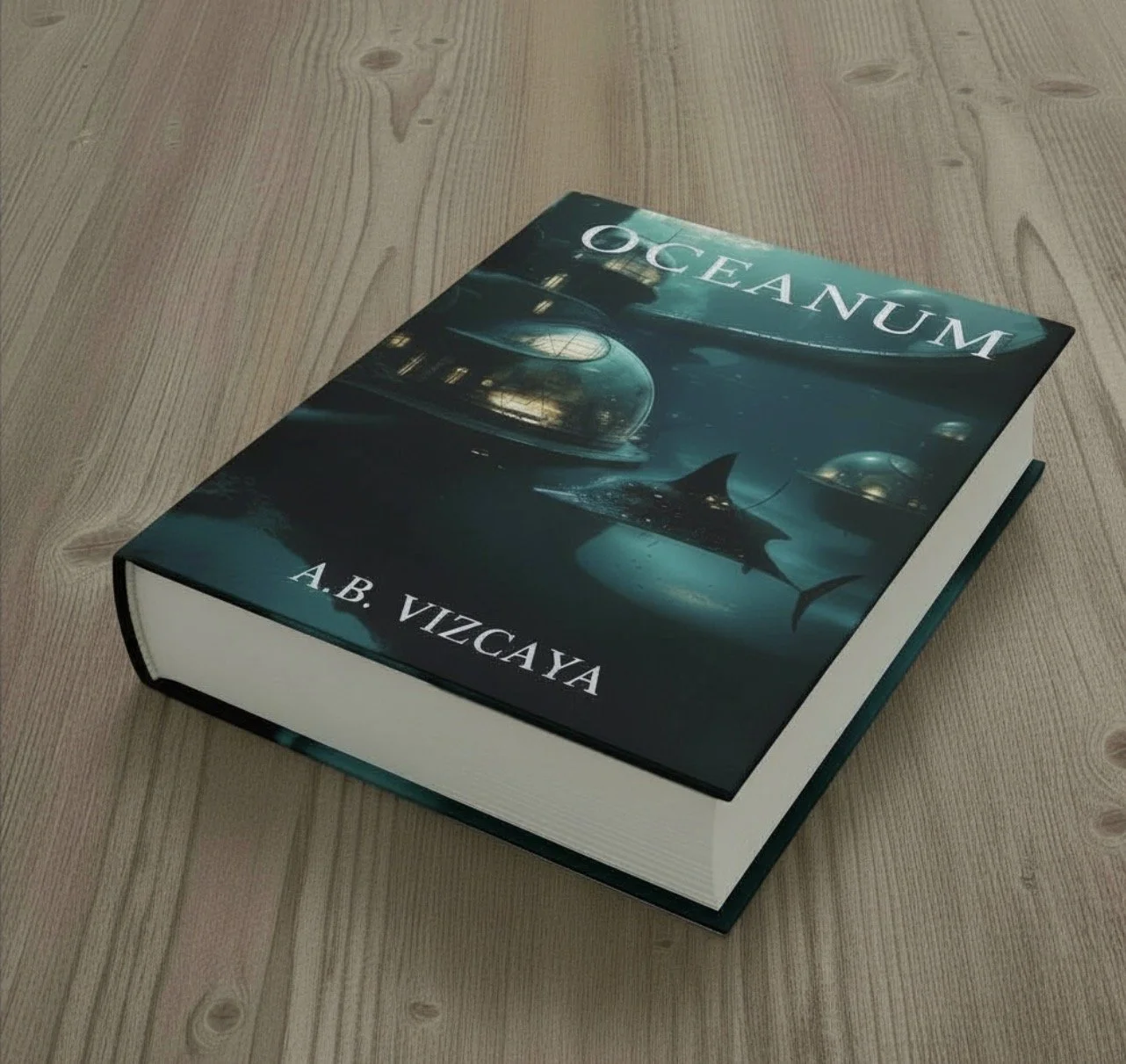
OCEANUM
There are only twenty first-print copies in existence. That’s it. No hidden stock. No quiet second batch. Just twenty originals — a snapshot of where this journey began.
A
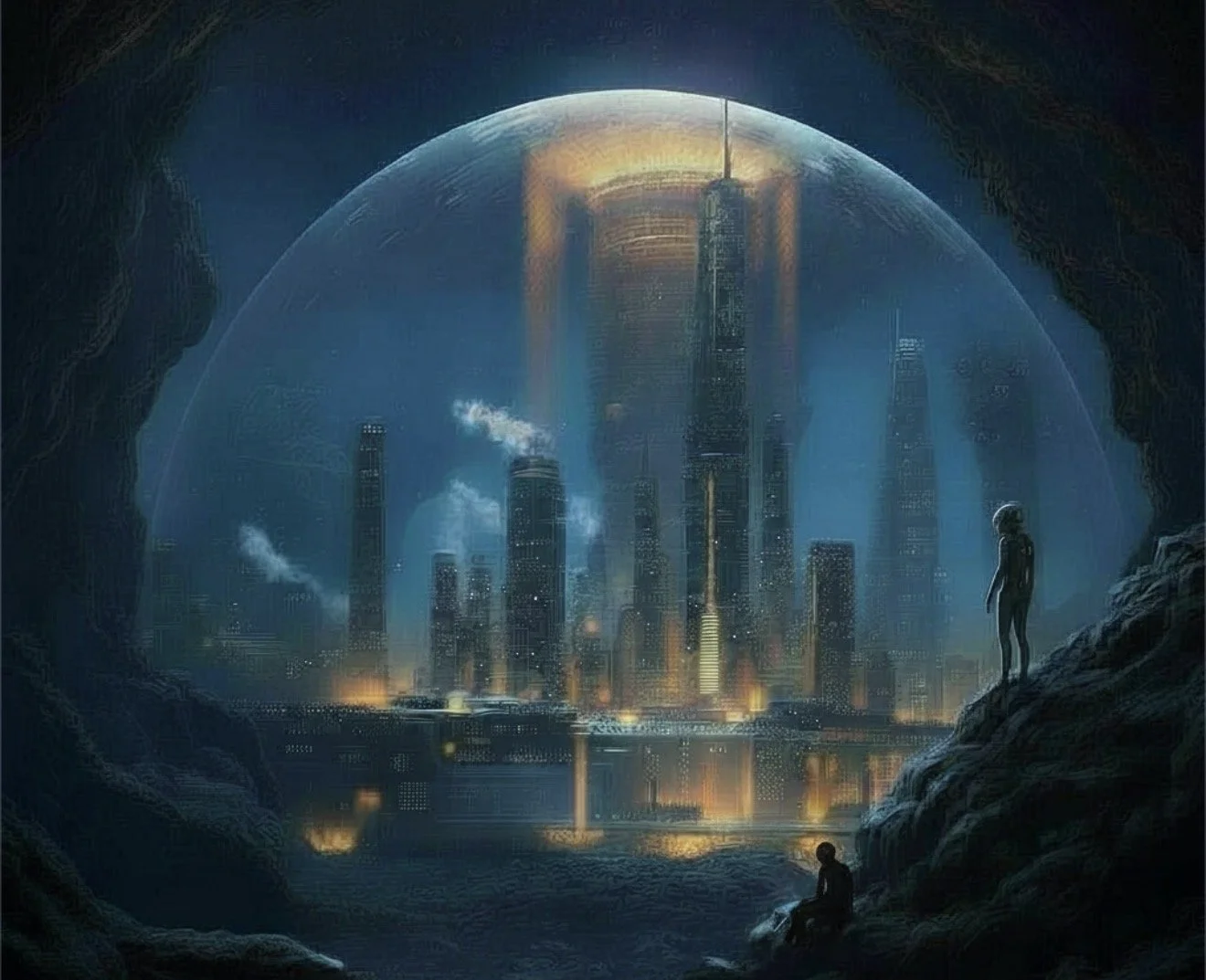
In the aftermath of a devastating global pandemic and the slow collapse of surface civilization, a small group of humans made a choice no society had ever dared: they went deeper.
Far beneath the waves, the city-state of Oceanum stands as the most advanced civilization on Earth—a self-sustaining underwater metropolis built on engineering mastery, artificial intelligence, and hard-won lessons drawn from the failures of the old world. Created in secrecy by a handful of visionaries led by the brilliant and hunted Kaelen Collier, Oceanum was not born from conquest or consensus, but from urgency. Targeted by governments unwilling to relinquish control, its founders vanished beneath the sea to survive.
Governed in partnership with powerful AI systems and bound by strict ethical accords, Oceanum achieved something the surface never could: stability without tyranny, progress without domination.
But while Oceanum thrives below the waves, the world above continues to fracture.
On land, civilization has splintered into competing futures. Brutal theocracies wield faith as law. Resurgent empires cling to fossil power and force. Agrarian societies retreat inward, trading innovation for tradition and survival. Scarcity and ideology harden into policy, and violence becomes governance. In this broken world, Oceanum’s existence—its technology, its resources, its order—cannot remain hidden.
Oceanum has no choice but to trade. And the powers above look on with envy, fear, and growing hostility.
At the heart of the story lies an uneasy alliance between human judgment and artificial reason. Oceanum’s sentient systems can predict collapse, optimize survival, and enforce balance—but they cannot feel belief, loyalty, grief, or hope. Those burdens remain human. Together, young visionaries, veteran leaders, and intelligent machines must confront a dangerous question in a world forever changed by plague:
Are humanity’s flaws failures to be erased—or the very qualities no machine can replace?
Oceanum is a sweeping hard science-fiction epic about advanced technology, AI governance, fractured post-plague societies, and the moral cost of survival—where the future is no longer shared, and choosing how to endure may be more dangerous than extinction itself.
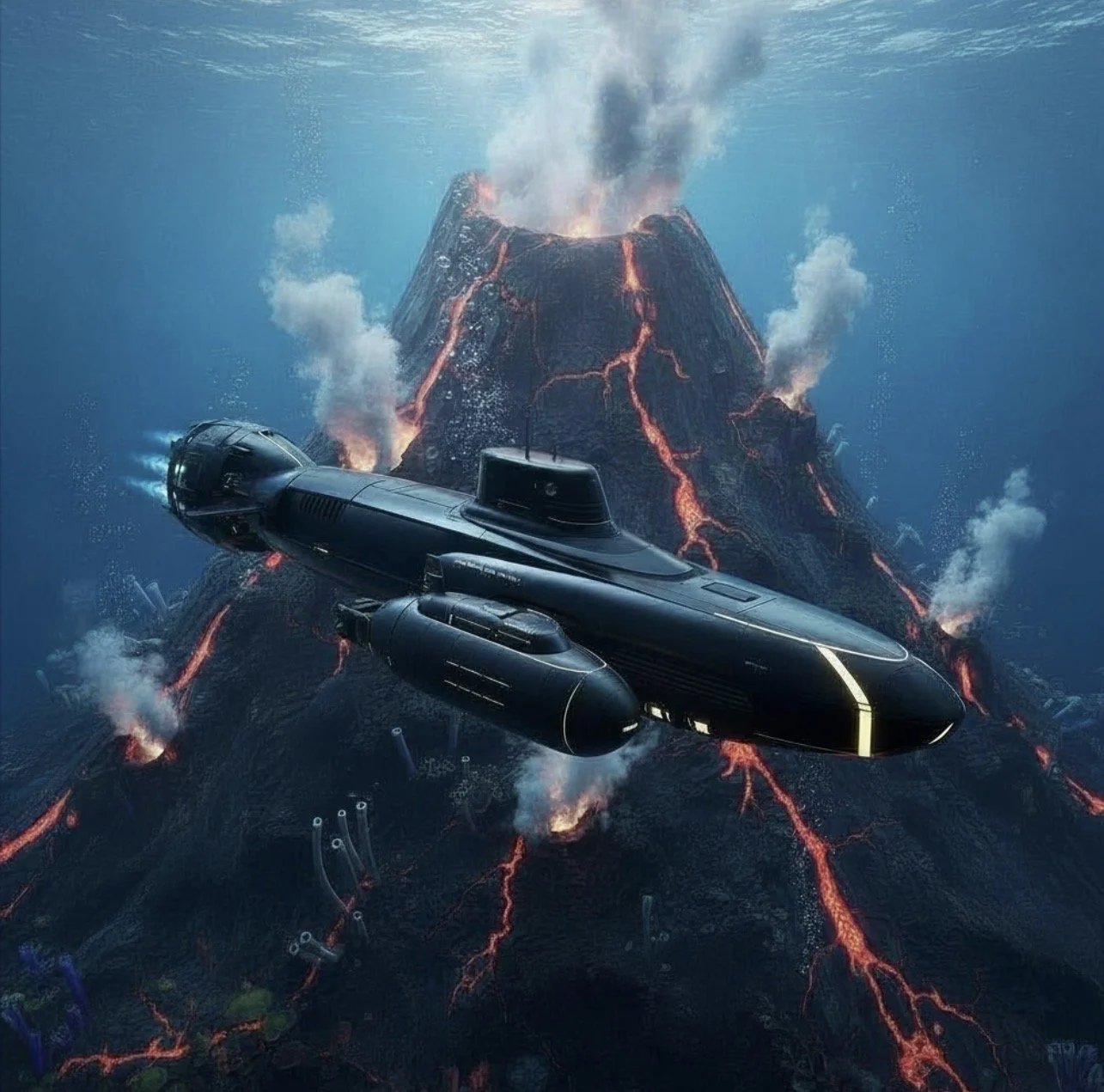
The second book in the series. Projected release date 1 October 2026
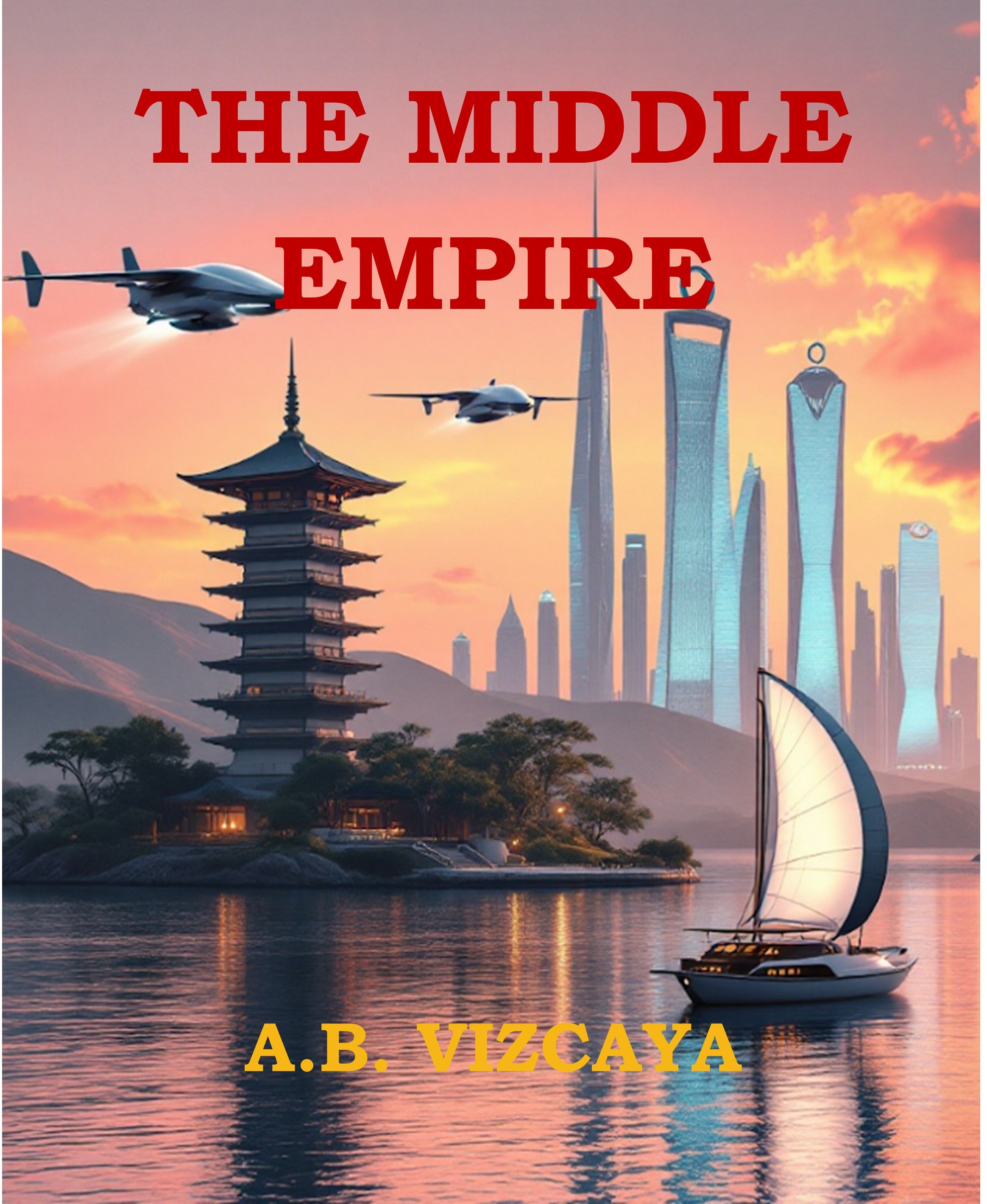
The Middle Empire survived the plague—and emerged with clarity.
While the West fractured into rival powers, it did not weaken. It adapted. It grew louder, more aggressive, more dangerous. Industry returned. Armies expanded. Ideology hardened into doctrine. The Middle Empire does not believe in balance between incompatible systems. It believes in correction.
To the Middle Empire, the West is no longer chaos—it is a disease, spreading across the land, consuming resources, reshaping the world in its own unstable image.
And diseases are not negotiated with.
And beyond the land, beneath the ocean, something else waits—hidden, advanced, and unresolved. Another power watching the world slide toward reckoning, preparing to act
Who I am
A.B. Vizcaya grew up on the Big Island of Hawaiʻi and has spent much of his life working in environments where decisions matter, and mistakes carry weight. He served 26 years in the U.S. Army, beginning as an artillery observer before flying scout missions in the Kiowa Warrior and later serving as an Apache Longbow attack pilot. He also worked extensively with unmanned systems, gaining early experience with human-machine teaming in complex operational settings.
After military service, A.B. worked in a range of fields that took him from Dubai to Washington State, experiences that continue to shape his perspective and writing. He holds both a bachelor’s and a master’s degree from the University of Washington and now divides his time between Washington State and Hawaiʻi, living in the Snohomish Valley.
Outside of writing, A.B. has traveled to more than 30 countries, enjoys food as a way to understand culture, plays tabletop games, and fosters animals. He is also the founder and owner of Nanikoa, a research-driven wellness company.
The Oceanum Series grew out of long-standing questions about technology, governance, and survival, explored through speculative fiction grounded in real systems and consequences. When he isn’t writing, A.B. is usually traveling, cooking, or helping an animal transition to a permanent home.
ABOUT AI USE
I’ve watched the arguments about AI in art and writing get louder, harsher, and honestly a little exhausting. So here’s my take. I’m not going to let someone spend 2 minutes on a review to discredit my work, attempt to cancel me, and reduce years of work to tell the world it’s “AI-generated lit slop.” Do I use AI tools? Yes. I use them the same way writers have always used whatever tools existed — spellcheck, formatting, cleaning up sentences so what’s already in my head actually makes sense on a page. But the stories? Those are mine. Every character comes from people who left a mark on my life, and yes, the memories, both good and bad, shape them. From deployments in Afghanistan and Iraq. From memories that still smell like rice paddies in Korea when I was there as a young soldier back in 1989. From those 3 a.m. wake-ups when your brain refuses to shut off because I just had a great idea on where a character is going.
Writing isn’t magic. It’s messy. It’s rewriting entire chapters because the flow is wrong. It’s stopping in the middle of a grocery store to type a note into your phone because a clothing detail suddenly becomes important. It’s trying to remember a dream before it fades. It’s endless back-and-forth emails with beta readers, tracked changes everywhere, and another round of edits because one paragraph just doesn’t land. That’s the part nobody sees when they toss out labels.
And unfortunately, now if you use a modern writing program to better express your vocabulary or clean up your language, suddenly you’re “AI generated.” It doesn’t matter if the idea was 100% yours. It doesn’t matter if the characters lived in your head for years before a single sentence was written. The assumption comes fast and loud.
AI doesn’t replace my work — it helps me translate what I already see in my mind. The same goes for visuals. I’ll run fifty versions of a clip (my record is 89) if that’s what it takes to match the exact scene I imagined, just like I would send notes back to a commissioned artist until it feels right. I could write everything on a typewriter if I wanted to. I choose modern tools because they make my voice clearer, not because they create it for me.
I don’t make money doing this. I’ve probably spent more time and energy than I’ll ever get back. And that’s fine. I keep writing because the story matters to me, and because a small group of readers genuinely connects with it. I’m not forcing anyone to read my work. If it’s not for you, close the book, click on something else. But the vision, the voice, the long nights, and the years behind every page — those belong to me. Always have. Always will.